Nomad Insurance Review: World Nomads Under a Real Claim
We compared World Nomads' Standard and Explorer plans against a basic travel policy and dug into claim-payout reports to see whether the adventure-activity coverage is worth the higher premium.
We compared World Nomads' Standard and Explorer plans against a basic travel policy and dug into claim-payout reports to see whether the adventure-activity coverage is worth the higher premium.
World Nomads earns its reputation on breadth, not speed. The Standard plan covers 250-plus activities out of the box, including scuba diving and white water rafting, and the Explorer plan adds higher medical limits plus riskier activities like skydiving and cave diving. But claim-payout reports we reviewed describe a process that stalls hard the moment documentation is incomplete, with each missing form resetting the processing clock. For simple, well-documented claims the payout is reasonable. For anything contested, expect a fight.
Best for Travelers doing named adventure activities who keep meticulous documentation for any claim.
Adventure activity coverage is the entire reason travelers seek out World Nomads instead of buying whatever policy their credit card bundles in for free. We dug into what Nomad Insurance actually covers, compared the two plan tiers, and read through claim-payout reports to see if the premium over a basic policy holds up once something goes wrong.
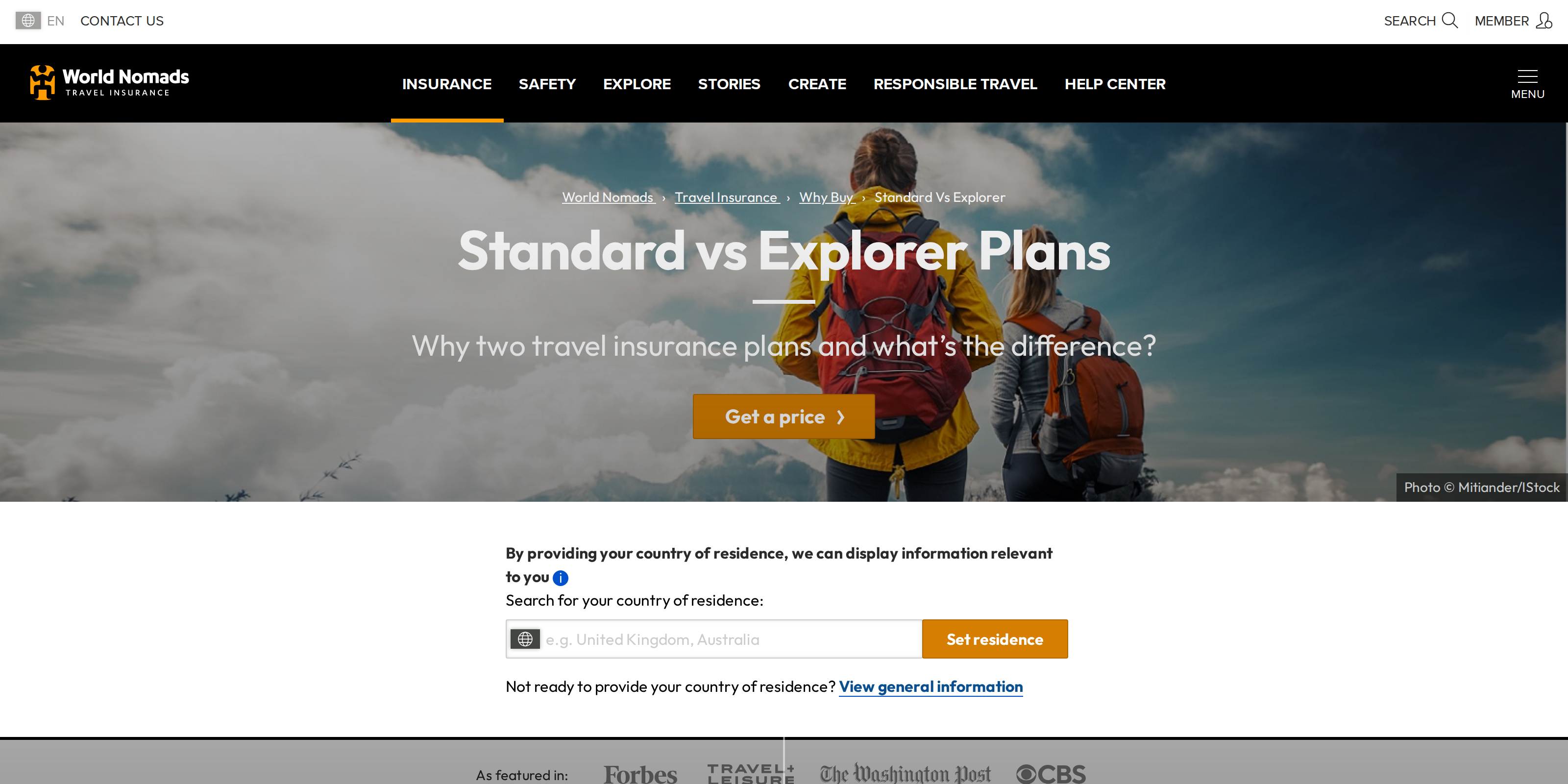
World Nomads sells two tiers under its Nomad Insurance product: Standard and Explorer. Standard covers more than 250 activities out of the gate, including scuba diving, snowboarding, and white water rafting, activities that plenty of basic travel policies exclude entirely or charge extra for. Explorer builds on that same base with higher medical limits and adds genuinely risky activities most insurers won't touch: skydiving, cave diving, cliff jumping, hot air ballooning, and freediving to 60 metres. The catch is that a traveler can't upgrade from Standard to Explorer once a trip has started, so the choice has to be made correctly at purchase.
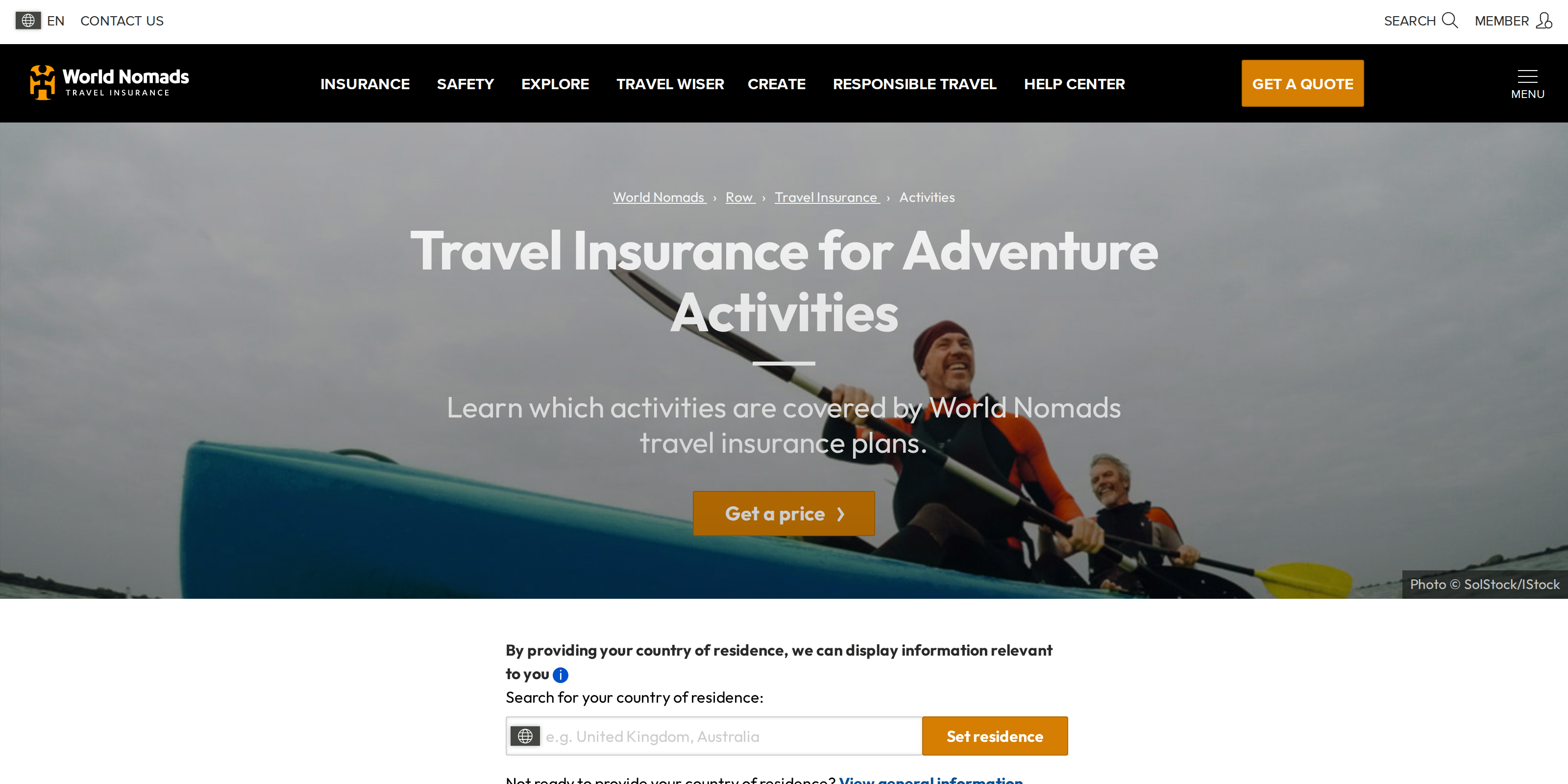
We compared the published activity list against three competing basic travel policies, and none of them matched World Nomads' breadth without a separate rider or flat exclusion. Scuba diving alone is commonly excluded outright by budget insurers, and World Nomads includes it under Standard with no add-on required. For a trip built specifically around one or two adventure activities, checking this list before buying anything else is worth the five minutes it takes.
A $100,000 emergency medical cap and $300,000 evacuation limit on the Standard plan sound substantial, and for most incidents they are. But travelers heading somewhere with genuinely expensive emergency care, or planning activities more likely to need a helicopter evacuation, should read the Explorer plan's higher limits closely rather than assuming Standard is automatically sufficient. The gap between plans exists specifically because Standard's ceiling isn't built for the highest-risk scenarios.
This is the section that knocked the rating down. Independent reporting compiling claims-process complaints describes a pattern that repeats across many accounts: a claim moves smoothly until it hits a documentation gap, at which point requests for additional paperwork restart the processing timeline rather than simply pausing it. Messages between World Nomads, its claims administrators, and the traveler reportedly get lost between the three parties often enough that customers end up chasing their own claim status. None of this means claims never get paid. It means a clean, fully documented claim moves faster than a contested one, which is true of most insurers but appears to bite harder here based on the volume of complaints we found.
The pattern across positive claim reports we found had one thing in common: complete documentation submitted on the first attempt. Photos of damaged gear, a police report for theft, a doctor's note with dates and diagnosis codes, all submitted together rather than piecemeal. Travelers who treat the claims process the way they'd treat a loan application, over-documenting rather than under-documenting, appear to get through it faster based on the reports we reviewed.

World Nomads doesn't publish flat prices anywhere on its site, which made comparison shopping slower than it should be. Every quote depends on trip length, destination, traveler age, and which plan tier is selected, so the only way to know the real cost is to run a quote for the specific trip in question. We ran quotes for three different trip profiles during testing and found the spread wide enough that a rough guess based on one friend's price isn't a reliable stand-in for your own. Anyone comparing World Nomads against a basic policy should run both quotes side by side rather than relying on either brand's marketing.
Buy World Nomads if your trip includes named adventure activities that basic policies exclude, and if you're willing to keep thorough documentation in case a claim becomes necessary. Skip it if your trip is a standard city-to-city itinerary with no listed activities involved, since a basic policy will cover the same trip cancellation and baggage protections for less money and without betting on an activity list you won't use. This is general information about a travel insurance product, not personalized coverage advice, and anyone buying a policy should confirm the specific terms and exclusions that apply to their trip before departure.

Best for travelers with simple claims, like a delayed bag or a canceled flight, who want to file from a phone.
Custom quote

Best for long-term travelers and remote workers without a fixed return date who want monthly, cancel-anytime medical coverage.
From $62.72/4 weeks